
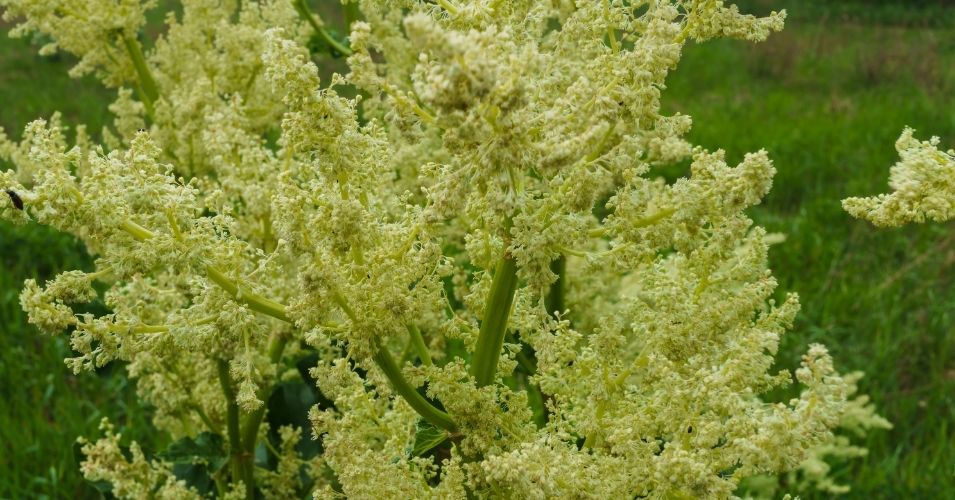
Rhubarb is one of those plants that quietly grows in the background until one day it surprises you with something unexpected. Many gardeners feel a bit unsure when they notice tall flower stalks rising above the familiar leafy base, and it often leads to one simple question.
Should you let rhubarb flower, or is it better to stop it?
This decision can affect how strong your plant stays, how much you can harvest, and even how long your rhubarb continues to thrive in your garden.
Understanding what flowering means for rhubarb will help you make the right choice with confidence.
What It Means When Rhubarb Starts to Bloom
When rhubarb begins to produce a flower stalk, it is usually a sign that the plant has reached a certain level of maturity and is shifting its focus from leaf and stalk growth to reproduction.
This change can catch gardeners off guard because the thick, tall stalk rises quickly and looks very different from the edible parts most people are used to harvesting.
This stage is often triggered by environmental conditions such as sudden temperature changes, stress, or simply the plant aging over time. A rhubarb plant that feels threatened or fully established may decide it is time to produce seeds, which is its natural way of continuing its life cycle.
The flower stalk itself draws attention because it can grow much taller than the rest of the plant, forming clusters of small blossoms at the top.
While it may look attractive, it signals that the plant is redirecting energy away from producing the juicy stalks gardeners typically want.
Some varieties are more likely to flower than others, especially older plants that have been growing in the same spot for several years. Soil quality, watering habits, and overall care can also influence how soon and how often flowering appears.
Understanding this process helps you see that flowering is not a problem by itself but rather a natural phase in the plant’s development. It becomes important only when it starts to affect how much you can harvest or how strong your plant remains over time.
Recognizing the early signs of blooming gives you the chance to decide what direction you want your plant to take. Once you understand why it happens, you can respond in a way that supports your gardening goals.
How Flowering Affects Stalk Growth and Harvest
When rhubarb shifts its energy toward producing a flower stalk, the impact on edible stalk growth becomes noticeable fairly quickly.
The plant begins to divert its stored nutrients into supporting the tall flowering structure, which means less energy is available for the thick, tender stalks people usually harvest.
This change often results in fewer stalks developing during the growing season, and the ones that do appear may be thinner or less vigorous. Gardeners who rely on rhubarb for cooking may find their harvest reduced if flowering is allowed to continue unchecked.
Another effect is the quality of the stalks themselves, as they can become tougher or less flavorful when the plant is focused on reproduction. While they are still safe to eat, they may not have the same satisfying texture or taste that makes rhubarb so appealing in recipes.
Over time, repeated flowering without intervention can weaken the plant because it uses up valuable energy reserves each season. This can lead to slower growth in future years and a noticeable decline in overall productivity.
The timing of flowering also matters, since early blooming in the season can have a stronger impact on harvest than later blooms. When it happens early, the plant has less time to produce strong stalks before its energy shifts away.
Even though the flower itself might look interesting, it often comes at the cost of the harvest most gardeners are aiming for.
Knowing how flowering changes growth patterns helps you decide whether to step in or let nature take its course.
Reasons You Might Want to Remove Flower Stalks
One of the main reasons gardeners choose to remove flower stalks is to protect the plant’s energy and keep it focused on producing strong, edible stems. When the flower is cut early, the plant quickly redirects its effort back into leaf and stalk development, which helps maintain a steady and reliable harvest.
This simple action can make a noticeable difference, especially during the main growing season when you want the plant to stay productive.
Many gardeners find that removing the flower stalk leads to thicker, juicier stems that are better suited for cooking and baking.
Another benefit of removing the flower stalk is that it supports long term plant health. Allowing the plant to spend too much energy on flowering year after year can slowly weaken it, which may result in smaller growth or reduced vigor over time.
Cutting the stalk also helps prevent the plant from entering a full reproductive cycle, which can sometimes slow overall development. By stepping in early, you are guiding the plant to stay in its most useful and productive state for your garden.
The process itself is easy and does not require special tools, as the stalk can be cut or gently pulled near the base once it appears.
Acting sooner rather than later makes the biggest impact, since the plant will have used less energy on the flower at that point.
Gardeners who regularly harvest rhubarb often make this a routine part of their care, treating flower removal as a simple maintenance step. It becomes one of those small habits that leads to healthier plants and better results over time.
Situations Where Letting It Flower Makes Sense
There are times when allowing rhubarb to flower can actually be a reasonable choice, depending on your goals and how you use the plant. If your focus is not on harvesting large amounts of stalks, the presence of flowers may not be a major concern.
Some gardeners enjoy the appearance of the tall flower stalk, as it adds a unique and slightly dramatic look to the garden. The blooms can create visual interest, especially when surrounded by lower growing plants that highlight its height.
Letting the plant flower can also be useful if you are interested in collecting seeds, although this is less common since rhubarb is often grown from divisions. Still, it offers a way to experiment with propagation and observe the plant’s full life cycle.
In certain cases, older plants that have already provided many years of harvest may be allowed to flower without much worry. At that stage, the gardener may feel comfortable letting the plant follow its natural rhythm without stepping in.
Another situation where flowering may be acceptable is when the plant is already under stress and producing fewer stalks, making harvest less of a priority.
In this case, removing the flower may not significantly change the outcome, so leaving it alone becomes an easier choice.
Even though flowering can reduce productivity, it does not automatically harm the plant if it happens occasionally. Choosing to let it flower can simply reflect a different goal, where observation and enjoyment matter more than harvest size.
Simple Steps to Manage Flowering and Keep Plants Healthy
Keeping rhubarb healthy while managing flowering begins with paying close attention to early signs of a flower stalk forming. When you notice a thick stem rising quickly from the center, acting early helps the plant stay focused on strong growth and steady stalk production.
One of the easiest steps is to remove the flower stalk as soon as it appears, cutting it close to the base without disturbing the surrounding leaves. This allows the plant to conserve its energy and shift it back into producing the parts you want to harvest.
Regular watering plays an important role in reducing stress, as rhubarb prefers consistent moisture in well drained soil. When the plant is not struggling for water, it is less likely to push into early flowering as a survival response.
Feeding the plant with balanced nutrients can also support steady growth, especially during the active growing season.
Healthy soil gives rhubarb the strength it needs to produce thick stalks without diverting resources toward reproduction too quickly.
Another helpful step is dividing older plants every few years, since overcrowded roots can trigger flowering more often. Giving each section enough space helps maintain vigor and encourages better overall performance.
Keeping weeds under control and ensuring the plant receives enough sunlight further supports its ability to grow without unnecessary stress. A well cared for plant is more likely to stay productive and less likely to rush into flowering.
These small actions work together to create a stable environment where rhubarb can thrive year after year.
With consistent care and timely attention, you can guide your plant toward stronger growth and more satisfying harvests.
Final Thoughts
Deciding whether to let rhubarb flower depends on what matters most to you as a gardener and how you want your plant to perform.
If your goal is a steady harvest of thick, flavorful stalks, removing the flower early is often the best choice.
On the other hand, if you enjoy seeing the plant follow its natural cycle, allowing it to bloom from time to time can still be a rewarding experience.