
Dogs are known for their loyalty, affection, and ability to form deep bonds with the people they trust. Most pet owners hope their dog feels safe, loved, and comfortable around them.
Unfortunately, that is not always the case. Fear can quietly develop for many reasons, including past experiences, harsh discipline, misunderstandings, or even unintentional behavior from an owner.
Recognizing the signs of fear is important because a frightened dog cannot fully relax or enjoy life. Learning to spot these behaviors allows you to rebuild trust, strengthen your relationship, and create a happier environment where your dog feels secure every day.
Your Dog Avoids Being Close to You
One of the clearest signs that a dog is afraid of its owner is avoiding physical closeness. While every dog has its own personality, most feel comfortable spending time near someone they trust. A fearful dog often does the opposite. Instead of walking toward you, it may quietly move away whenever you enter the room.
Some dogs choose to stay in another part of the house rather than sitting beside their owner. Others may leave the couch or bed the moment someone approaches. This behavior can seem subtle at first, especially if your dog is naturally independent. However, when avoidance becomes consistent, it deserves attention.
A frightened dog may also hesitate before approaching for meals, treats, or toys if you are nearby. Rather than eagerly running toward you, it may wait until you step away before feeling safe enough to eat or play.
Body language often tells an even bigger story. A scared dog may lower its head, tuck its tail, flatten its ears, or keep its body close to the ground when you come near. These signals show discomfort rather than relaxation, especially when they happen repeatedly during everyday interactions.
It is important not to force physical affection in these moments. Picking up a nervous dog or insisting on hugs can increase anxiety instead of reducing it. Giving your dog space while allowing it to approach on its own helps rebuild confidence over time. Trust grows through patience, and every positive interaction teaches your dog that your presence leads to safety rather than fear.
Body Language Reveals Hidden Fear
Dogs communicate far more through body language than through sounds. Learning to recognize these signals helps owners understand what their pets are feeling before fear grows into a bigger problem.
One common sign is a tucked tail. While some dogs naturally carry their tails lower than others, a tightly tucked tail often signals stress or fear. Paying attention to the position of the tail over time makes it easier to tell the difference between normal behavior and anxiety.
Ears also reveal emotional state. A frightened dog may pin its ears backward against its head whenever you speak loudly, walk toward it, or reach out to pet it.
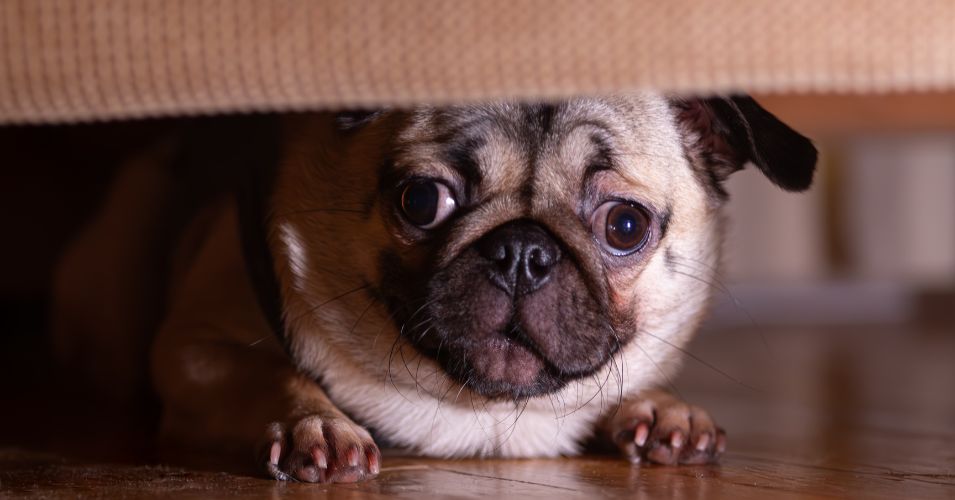
Facial expressions matter as well. Some fearful dogs avoid direct eye contact because staring can feel threatening. Others display what trainers call whale eye, where the whites of the eyes become visible because the dog is looking away while keeping its head still.
Lip licking is another behavior people often misunderstand. Many owners assume their dog is simply hungry, but repeated lip licking without food present can be a calming signal used during stressful situations.
Yawning also deserves attention. Dogs yawn when tired, but frequent yawning during uncomfortable moments often reflects anxiety instead of sleepiness.
Some dogs begin trembling even when the room is warm. Others pant heavily despite little physical activity because fear triggers the body’s natural stress response. When several of these signals appear together, they paint a clearer picture than any single behavior alone. Understanding body language allows owners to respond calmly instead of accidentally making the situation worse.
Everyday Habits Begin to Change
Fear often affects a dog’s daily routine long before owners realize something is wrong. Behavioral changes can appear gradually, making them easy to overlook at first.
A dog that once greeted you enthusiastically at the door may suddenly stop doing so. Instead of wagging its tail with excitement, it may stay hidden until the house becomes quiet again.
Changes in appetite can also occur. Some frightened dogs eat less because stress reduces their interest in food. Others may refuse treats from the very person they fear while happily accepting food from someone else.
Playtime often changes as well. A dog that previously loved fetch, tug of war, or interactive games may seem uninterested whenever its owner is involved. It may still enjoy playing alone or with other family members, suggesting the problem is not a lack of energy but discomfort around one individual.
Sleep patterns sometimes shift too. A fearful dog may choose unusual sleeping spots that keep distance between itself and its owner. It might hide beneath furniture or spend more time in isolated areas of the home where it feels less vulnerable.
House training problems can even develop. Stress sometimes causes accidents indoors despite years of reliable bathroom habits. Rather than assuming stubbornness, owners should consider whether fear or anxiety could be contributing to these changes.
Routine behaviors provide valuable clues because they reflect how safe a dog feels in its daily environment. Paying attention to these shifts makes it easier to identify problems before they become deeply rooted.
Fear Can Lead to Defensive Behavior
Many people believe aggressive behavior always comes from dominance. In reality, fear is one of the most common reasons dogs growl, bark, or snap.
A scared dog often feels trapped. When escape seems impossible, it may use defensive behaviors to create distance between itself and whatever feels threatening.
Growling should never be ignored or punished. A growl is communication that tells you the dog feels uncomfortable and wants more space. Punishing the warning may teach the dog to skip the growl entirely, increasing the risk of an unexpected bite later.
Some dogs bark excessively whenever their owner approaches. Others freeze completely before suddenly trying to run away. Both reactions reflect fear rather than confidence, even if they appear very different on the surface.
Cowering is another common behavior. The dog may shrink into a corner, lower its entire body, or roll partly onto its side while keeping tense muscles. Although this posture appears submissive, it often signals extreme discomfort.
A fearful dog may also urinate during greetings. This reaction is not an act of disobedience. Instead, it is an involuntary response caused by overwhelming stress that the dog cannot easily control.
Owners sometimes mistake these behaviors for bad manners and respond with punishment. Unfortunately, harsh corrections usually increase fear instead of solving the problem. Responding calmly while identifying the source of anxiety helps prevent defensive reactions from becoming long term habits. Professional guidance from a qualified trainer or veterinary behaviorist may also be helpful when fear has reached this stage.
Building Trust Takes Time and Consistency
If your dog seems afraid of you, the situation is not necessarily permanent. Dogs are remarkably resilient, especially when treated with kindness, patience, and understanding.
The first step is identifying anything that may have contributed to the fear. Loud yelling, physical punishment, rough handling, unpredictable behavior, or forcing unwanted interactions can all damage trust over time.
Once these habits stop, positive experiences should replace them. Reward calm behavior with treats, praise, toys, or gentle affection if your dog enjoys being touched. Allow your dog to make choices whenever possible instead of forcing interactions.
Consistency is equally important because dogs feel safer when they know what to expect. Feeding schedules, walks, play sessions, and bedtime routines all help create stability and reduce uncertainty.
Training should focus on positive reinforcement rather than punishment. Rewarding desired behaviors builds confidence while strengthening your relationship. Speaking in a calm voice also makes a difference because dogs pay close attention to tone, even when they do not understand every word.
Respecting your dog’s boundaries is another essential part of rebuilding trust. If your dog walks away, allow it to leave without chasing or cornering it. Over time, curiosity often replaces fear, and each positive interaction becomes another reminder that you are a source of comfort rather than something to avoid.
Although rebuilding trust may take weeks or even months, steady progress is possible when patience remains at the center of every interaction. Small improvements may not happen overnight, but consistency can make a lasting difference.
Final Thoughts
Recognizing that your dog may be scared of you can feel upsetting, but it is also the first step toward creating a healthier relationship. Dogs communicate constantly through their actions, body language, and daily habits. When you learn to notice these signals, you gain valuable insight into how your pet truly feels.
Fear does not always mean an owner has intentionally done something wrong. Sometimes simple misunderstandings, inconsistent handling, or previous experiences shape a dog’s behavior. The encouraging news is that trust can often be rebuilt through patience, gentle interactions, and positive reinforcement.
Every calm conversation, rewarding experience, and respectful choice helps strengthen the bond between you and your dog. By making your pet feel safe, understood, and respected, you create the foundation for a relationship built on confidence, affection, and lasting companionship that both of you can enjoy for years to come.