
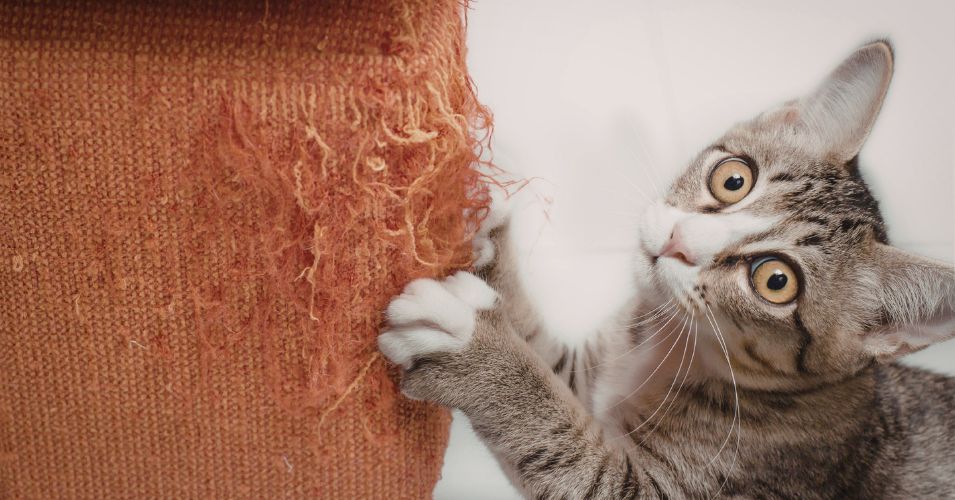
If you’ve ever caught your cat scratching the couch, jumping on the kitchen counter, or knocking a glass off the table, you’ve probably wondered how to discipline them effectively. While cats can certainly learn rules and boundaries, they don’t respond to training the same way dogs do.
The good news is that cats are far more trainable than many people realize. The key is understanding what motivates them and using techniques that encourage good behavior instead of relying on punishment.
With the right approach, you can teach your cat better habits while strengthening the bond you share.
Understanding Why Cats Misbehave
One of the biggest mistakes cat owners make is assuming their pet is acting out on purpose. In reality, most unwanted behaviors are rooted in natural instincts. A cat scratching the couch isn’t trying to upset you. Scratching helps maintain healthy claws, stretch muscles, and mark territory.
The same goes for climbing. Cats naturally seek out high places because they feel safer when they can observe their surroundings from above. That’s why kitchen counters, bookshelves, and the tops of cabinets often seem so appealing.
Boredom is another common cause of behavior problems. Indoor cats have fewer opportunities to hunt and explore than their outdoor counterparts, so they often look for ways to entertain themselves. Unfortunately, those activities don’t always align with what their owners consider acceptable.
Stress can also play a role. Changes such as moving house, introducing a new pet, welcoming a baby, or even rearranging furniture can affect a cat’s sense of security. Some cats respond by becoming withdrawn, while others become more vocal or destructive.
It’s also important to remember that sudden changes in behavior can sometimes signal a health issue. A cat that suddenly starts avoiding the litter box or becomes unusually aggressive may be experiencing discomfort or illness. If a new behavior appears out of nowhere, it’s worth speaking with a veterinarian before treating it as a training problem.
Once you understand why your cat is behaving a certain way, you’re in a much better position to guide them toward more appropriate habits.
Positive Reinforcement Beats Punishment Every Time
Many people think discipline means punishment, but that approach rarely works with cats. Yelling, spraying water, or physically correcting a cat may stop a behavior in the moment, but it doesn’t teach the lesson most owners hope it will.
Cats don’t connect punishment to past actions the same way humans often expect. If you discover your cat on the counter and react several seconds later, your cat is unlikely to understand why you’re upset. Instead, they may simply learn that you sometimes behave unpredictably.
Over time, punishment can create fear and anxiety. A cat that feels threatened may hide more often, avoid interaction, or become defensive. This can damage the trust you’ve worked hard to build.
Positive reinforcement is much more effective because it focuses on rewarding the behaviors you want to see. When your cat makes a good choice, reward them immediately with something they enjoy. Depending on your cat, that could be a treat, praise, petting, or a favorite toy.
For example, if you’re trying to stop furniture scratching, reward your cat every time they use a scratching post. If you’re teaching them to come when called, offer a reward each time they respond.
Timing matters. The reward should come within a few seconds of the desired behavior so your cat can make the connection. If you wait too long, the lesson becomes less clear.
Many cat owners are surprised by how quickly their pets learn when rewards are involved. Cats may seem independent, but they’re excellent at figuring out which actions produce positive outcomes.
Training sessions should remain short and enjoyable. Five minutes of focused training is often more productive than a long session that leaves your cat bored or frustrated. The goal is to make learning feel rewarding rather than stressful.
Create an Environment That Encourages Good Habits
Sometimes the easiest way to improve your cat’s behavior is to make good choices easier than bad ones. Cats are heavily influenced by their environment, so small changes around the home can have a surprisingly big impact.
Take scratching, for example. Many owners purchase a scratching post and expect their cat to abandon the couch immediately. Unfortunately, it doesn’t always work that way. If the scratching post is tucked away in a quiet corner while the couch sits in the center of family activity, the couch may remain the more attractive option.
Placing scratching posts near your cat’s favorite scratching spots often leads to better results. You may also need to experiment with different materials. Some cats prefer cardboard, while others prefer sisal rope or carpeted surfaces.
Climbing is another instinct that deserves an appropriate outlet. If your cat constantly jumps onto counters or shelves, providing a cat tree or window perch can satisfy their desire for height. Many cats stop seeking forbidden spaces when they have a designated place to climb and observe their surroundings.
Mental stimulation is equally important. A bored cat is far more likely to develop annoying habits than one with plenty of opportunities to play and explore. Interactive toys, puzzle feeders, and regular play sessions help satisfy your cat’s natural hunting instincts.
Even a simple routine can make a difference. Cats tend to feel more secure when meals, playtime, and daily activities occur at roughly the same times each day. Predictability reduces stress and often leads to better behavior overall.
It can also help to remove temptation whenever possible. If your cat repeatedly knocks decorative items off a shelf, consider relocating those objects temporarily. While training is important, managing the environment can prevent unnecessary frustration for both you and your pet.
The goal isn’t to control every aspect of your cat’s life. It’s to create an environment where the behaviors you want become the easiest and most rewarding choices.
Correct Common Cat Behavior Problems
Most cat owners deal with a handful of common behavior issues at some point. Fortunately, many of these habits can be improved with patience and consistency.
Scratching furniture is probably the most common complaint. Rather than focusing on stopping the scratching altogether, focus on redirecting it. Every time you see your cat using an approved scratching surface, reward them. Consistent reinforcement helps your cat understand which scratching locations are acceptable.
Counter jumping can be more challenging because it often happens when nobody is around. Start by removing anything that makes the counter interesting, including food, crumbs, and enticing smells. At the same time, provide alternative elevated spaces where your cat is allowed to climb.
Play biting is another issue many owners face, especially with kittens. While tiny bites may seem harmless at first, they can become problematic as a cat grows. If your cat bites during play, end the interaction immediately. This teaches them that biting causes the fun to stop.
It’s also a good idea to avoid using your hands as toys. Encouraging a kitten to chase fingers may seem cute, but it can create habits that are difficult to break later. Wand toys, balls, and other interactive toys provide a much better outlet for playful energy.
Excessive meowing often develops because it works. If your cat has learned that vocalizing gets attention, food, or treats, they’ll likely continue doing it. While it can be difficult, try not to reward demanding behavior. Instead, wait for a moment of quiet before giving your cat what they want.
Litter box problems should always be taken seriously. Medical issues, stress, dirty litter boxes, or changes in the household can all contribute to accidents. Punishment is never the answer. Instead, focus on identifying the underlying cause and addressing it directly.
Remember that progress isn’t always immediate. Some cats learn new habits within days, while others need weeks of repetition before a behavior truly changes. Patience is often the difference between success and frustration.
Consistency Makes Training Easier
If there’s one quality that separates successful cat training from unsuccessful training, it’s consistency. Cats learn best when the rules stay the same from day to day.
Imagine allowing your cat on the couch one day but scolding them for it the next. From your perspective, the difference may seem obvious. From your cat’s perspective, the rules suddenly changed for no apparent reason.
Clear boundaries make learning easier. Decide what behaviors are acceptable and stick with those expectations. If countertops are off-limits, they should remain off-limits every day, not just when guests are visiting.
Consistency also applies to everyone in the household. If one person rewards a behavior while another discourages it, your cat receives mixed messages. Agreeing on household rules helps avoid confusion and speeds up the learning process.
It’s important to stay calm during training. Cats are highly observant and can pick up on frustration, anger, and tension. A calm response is almost always more effective than an emotional one.
Don’t overlook the value of small victories. A cat that uses the scratching post once today may use it several times tomorrow. A cat that responds to their name occasionally may become reliable with enough practice. Progress tends to happen gradually, and those small improvements eventually add up.
The owners who see the best results aren’t necessarily the most experienced. They’re usually the ones who remain patient, consistent, and willing to keep reinforcing good habits over time.
Final Thoughts
Learning how to discipline a cat isn’t about punishment, dominance, or forcing obedience. It’s about understanding how cats think and creating an environment that encourages the behaviors you want to see.
When you focus on positive reinforcement, provide appropriate outlets for natural instincts, and remain consistent with your expectations, training becomes much more effective. Most behavior problems can be improved once you identify the cause and respond in a way your cat understands.
Every cat is different, so what works quickly for one may take longer for another. The key is to stay patient and celebrate progress along the way.
With time, consistency, and the right training techniques, you can help your cat develop better habits while building a stronger and more trusting relationship. In the end, that’s what successful discipline is really about.